


Artificial intelligence is transforming enterprise software faster than any previous technology shift. Organizations are no longer evaluating AI as an experimental capability—they are integrating it into customer support, software development, business operations, and decision-making. As a result, the responsibilities of technical post-sales leaders have expanded well beyond product implementation and troubleshooting.
Today’s enterprise customers expect trusted advisors who can help them adopt AI responsibly, integrate intelligent workflows into existing systems, and maximize long-term business value. Whether you’re a Technical Account Manager (TAM), Solutions Architect, Customer Success Engineer, Solution Engineer, Professional Services Consultant, or Customer Success Leader, developing AI-related skills is essential to delivering successful outcomes.
This guide explores the AI competencies that modern technical post-sales leaders need in 2026, why those skills matter, and how they help organizations improve customer adoption, implementation success, and long-term retention.
Why Technical Post-Sales Leadership Is Changing
Not long ago, technical post-sales teams focused primarily on onboarding customers, resolving implementation issues, configuring software, and supporting integrations. While these responsibilities remain important, enterprise customers increasingly expect strategic guidance throughout the customer lifecycle.
Organizations adopting AI often ask questions such as:
- Which AI development tools fit our engineering workflow?
- How should we introduce AI without disrupting existing operations?
- Which business processes should be automated first?
- How can AI improve developer productivity?
- What governance and security controls should we implement?
- How do we measure AI implementation success?
Answering these questions requires much more than technical product knowledge. It demands a combination of technical expertise, business understanding, communication skills, and AI literacy.
Modern technical post-sales professionals are expected to bridge gaps among engineering teams, business stakeholders, product managers, and executive leadership.
Gartner. Service and Support Customer Experience and Analytics Overview.

The Growing Importance of Customer Success
Customer success has become one of the most critical business priorities for enterprise software companies. However, increasing investment alone does not guarantee better outcomes.
A 2024 report from Bain & Company found that 75% of surveyed software companies experienced declining net revenue retention despite increased investment in customer success, while nearly two-thirds of software customers believed their post-sales needs were only moderately addressed or worse.
These findings reveal an important lesson:
Hiring more customer success professionals isn’t enough.
Organizations must also improve how technical post-sales teams guide customers through implementation, adoption, optimization, and long-term value realization.
Why AI Skills Matter More Than Ever
Artificial intelligence is influencing nearly every stage of the customer journey.
Technical leaders now help customers:
- Evaluate AI-powered products
- Select appropriate developer tools.
- Design implementation strategies
- Automate repetitive workflows
- Improve developer experience (DX)
- Integrate AI with existing software.
- Establish governance and security policies.
- Measure business outcomes
Rather than serving solely as product experts, successful post-sales leaders increasingly act as strategic consultants who align technology decisions with customer objectives.
What Is a Technical Post-Sales Leader?
The title varies from Company to Company, but the mission remains consistent.
Technical post-sales leaders help customers achieve measurable business value after purchasing enterprise software.
Depending on the organization, this role may include responsibilities commonly associated with:
- Technical Account Manager (TAM)
- Solutions Architect
- Customer Success Engineer
- Solution Engineer
- Professional Services Consultant
- Technical Consultant
- Enterprise Implementation Manager
Although responsibilities differ, these professionals share a common objective: ensuring customers successfully adopt, integrate, and expand their use of technology.

The Shift from Product Support to Strategic Partnership
Traditional post-sales engagement often ended after deployment.
Today’s enterprise software vendors increasingly focus on long-term partnerships.
Instead of simply answering technical questions, post-sales leaders now help customers:
- Develop AI adoption roadmaps.
- Identify workflow automation opportunities.
- Improve software utilization
- Increase developer productivity
- Reduce operational complexity
- Support digital transformation initiatives.
This consultative approach creates stronger customer relationships and improves business outcomes over time.
Core AI Skills Every Technical Post-Sales Leader Should Develop
Modern technical leadership requires expertise across several complementary areas.
1. AI Implementation Leadership
Customers need guidance beyond installation.
Technical leaders should understand how to:
- Plan AI deployments
- Define implementation milestones
- Coordinate multiple teams
- Reduce deployment risks
- Measure implementation success
Successful AI implementation depends on aligning technical execution with business goals, not just software configuration.
2. AI Workflow Automation
Automation is becoming a major driver of operational efficiency.
Technical post-sales leaders should understand how AI can streamline processes such as:
- Customer onboarding
- Ticket routing
- Documentation
- Incident response
- Internal approvals
- Reporting
- Knowledge management
According to Bain, organizations should first evaluate and redesign business processes before introducing generative AI, rather than automating inefficient workflows.
3. Developer Tooling Knowledge
Developer productivity directly affects implementation success.
Technical leaders don’t need to master every platform, but they should understand categories such as:
- AI coding assistants
- Documentation tools
- Automated testing platforms
- Developer collaboration software
- API management solutions
- CI/CD platforms
This knowledge helps customers choose solutions that improve productivity while fitting their existing technology stack.
4. Customer Success Engineering
Customer success engineering combines technical expertise with customer engagement.
Responsibilities often include:
- Supporting onboarding
- Troubleshooting complex issues
- Monitoring adoption
- Recommending best practices
- Identifying optimization opportunities
- Helping customers achieve measurable business outcomes
Rather than ending support after deployment, customer success engineering focuses on long-term value realization.
5. Developer Experience (DX)
Developer Experience (DX) has become increasingly important for enterprise software adoption.
A positive developer experience can encourage teams to:
- Build integrations
- Explore advanced features
- Recommend products internally
- Expand platform usage
Technical post-sales professionals often collect developer feedback and communicate it to product and engineering teams, helping improve future releases.
Why Technical Implementation Still Matters
While AI strategy is important, customers continue to value strong technical guidance during implementation.
Bain’s research found a significant mismatch between customer priorities and vendor assumptions.
Software buyers ranked technical implementation and deployment assistance as their highest customer success priority, while vendors ranked it much lower.
This finding highlights why technical expertise remains essential even as AI capabilities expand.
Organizations benefit most when technical leaders combine strategic consulting with practical implementation knowledge.
AI Is Expanding—Not Replacing—the Human Role
Some professionals worry that AI will replace technical consulting roles.
In practice, AI is changing the nature of the work rather than eliminating it.
AI can assist with:
- Summarizing documentation
- Generating implementation checklists
- Suggesting troubleshooting steps
- Automating repetitive administrative tasks
- Producing technical documentation
However, customers still rely on experienced professionals to:
- Understand business objectives
- Resolve complex implementation challenges.
- Coordinate cross-functional teams
- Balance technical and organizational priorities.
- Build trust with stakeholders.
The strongest technical post-sales leaders use AI to enhance productivity while continuing to provide strategic, human-centered guidance.
Building the Foundation for AI-Ready Leadership
Organizations increasingly expect technical post-sales leaders to understand both technology and business strategy. Success now depends on combining AI literacy, customer success expertise, implementation planning, and effective communication into a single, customer-focused approach.
Developing these capabilities helps organizations improve adoption, strengthen customer relationships, and deliver measurable business outcomes throughout the customer lifecycle.

Which AI Skills Do Technical Post-Sales Leaders Need in 2026?
We explored how technical post-sales leadership has evolved from traditional implementation support into a strategic customer-facing role. Modern leaders are expected to guide enterprise AI adoption, improve customer success, and align technology with business objectives.
This section focuses on the practical skills that separate high-performing technical post-sales professionals from the rest. We’ll examine AI developer tools, API integrations, platform engineering, developer experience (DX), workflow automation, and best practices for enterprise AI implementation.
Which AI Developer Tools Should Technical Post-Sales Leaders Understand?
Technical post-sales leaders don’t need to become full-time software developers, but they should understand the major categories of AI-powered developer tools their customers use every day.
This knowledge enables more meaningful conversations with engineering teams while helping customers select solutions that improve productivity without introducing unnecessary complexity.
AI Coding Assistants
AI coding assistants help software teams accelerate development by assisting with tasks such as:
- Writing boilerplate code
- Explaining unfamiliar code
- Refactoring applications
- Generating unit tests
- Reviewing pull requests
- Creating documentation
Although these tools significantly improve productivity, they still require human oversight for security, compliance, and architectural decisions.
Technical leaders should understand both the benefits and limitations so they can provide balanced implementation guidance.
AI Documentation Tools
Keeping documentation accurate is one of the biggest challenges for engineering organizations.
Modern AI documentation platforms can assist by:
- Drafting API documentation
- Summarizing release notes
- Creating onboarding guides
- Updating implementation instructions
- Organizing knowledge bases
These capabilities reduce manual work while improving consistency across technical teams.
AI Testing Platforms
Software quality remains a top priority for enterprise customers.
AI-assisted testing tools can support:
- Test case generation
- Regression testing
- Bug detection
- Performance monitoring
- Quality assurance workflows
Understanding how these platforms fit into software delivery allows technical post-sales leaders to recommend realistic implementation strategies.
Why Developer Productivity Matters
Enterprise customers expect software teams to deliver value quickly.
Developer productivity influences:
- Deployment speed
- Feature delivery
- Issue resolution
- Customer satisfaction
- Product adoption
Improving productivity isn’t simply about writing code faster.
It also includes reducing unnecessary interruptions, improving collaboration, automating repetitive tasks, and simplifying development workflows.
Technical post-sales leaders often help customers identify opportunities where better tooling can reduce operational friction.
What Makes a Great Developer Experience (DX)?
Developer Experience (DX) refers to how efficiently developers can build, test, deploy, and maintain software.
A strong developer experience typically includes:
- Clear documentation
- Reliable APIs
- Interactive developer portals
- SDKs
- Sample applications
- Consistent onboarding
- Helpful error messages
When developers enjoy working with a platform, they are generally more likely to:
- Build integrations
- Explore advanced capabilities
- Recommend products internally
- Expand usage across departments.
Improving DX ultimately supports stronger customer adoption and long-term retention.
Why API Integration Skills Are Essential
Enterprise software rarely operates in isolation.
Organizations expect applications to integrate with existing business systems.
Technical post-sales leaders should understand fundamental API concepts including:
- REST APIs
- Authentication
- Authorization
- OAuth
- Webhooks
- Rate limiting
- Error handling
- Data synchronization
While they may not write production code every day, understanding these concepts allows them to communicate effectively with engineering teams and identify potential implementation risks early.
Common Enterprise Integrations
Modern AI solutions frequently connect with:
- CRM platforms
- ERP systems
- Customer support platforms
- Identity providers
- Business intelligence tools
- Cloud storage
- Internal APIs
- Data warehouses
- Collaboration platforms
Helping customers build reliable integration strategies improves scalability while reducing manual work.
How Platform Engineering Supports Enterprise AI
Platform engineering has become increasingly important as organizations standardize software delivery.
Instead of building one-off environments for every project, platform engineering creates reusable infrastructure that enables development teams to work consistently.
Technical post-sales leaders benefit from understanding concepts such as:
- Infrastructure as Code (IaC)
- Container orchestration
- Continuous Integration (CI)
- Continuous Delivery (CD)
- Observability
- Identity and Access Management
- Secret management
- Monitoring platforms
Although implementation responsibilities typically remain with engineering teams, technical leaders who understand these concepts can provide more effective customer guidance.
AI Workflow Automation: Creating Business Value
Automation has become one of the most practical applications of AI.
Rather than replacing employees, AI workflow automation reduces repetitive manual work, allowing teams to focus on higher-value activities.
Common automation opportunities include:
- Customer onboarding
- Ticket routing
- Documentation updates
- Incident response
- Usage reporting
- Internal approvals
- Knowledge management
- Deployment notifications
However, automation should support well-designed processes rather than compensate for poor ones.
Bain & Company recommends evaluating and redesigning business processes before applying generative AI to avoid scaling existing inefficiencies.
AI Integration Strategy: Thinking Beyond Individual Tools
Successful enterprise AI initiatives require more than selecting the right software.
Technical post-sales leaders should help customers answer questions such as:
- How will AI integrate with existing workflows?
- Which systems need to exchange data?
- What security controls are required?
- How will user permissions be managed?
- Can the solution scale as adoption grows?
- How will success be measured?
Answering these questions early reduces implementation risks and creates stronger long-term outcomes.
Customer Success Engineering in an AI-Driven World
Customer Success Engineering connects technical implementation with measurable business results.
Rather than ending engagement after deployment, customer success engineers continue helping customers maximize product value.
Typical responsibilities include:
- Guiding onboarding
- Solving technical issues
- Monitoring adoption
- Recommending optimizations
- Supporting expansion opportunities
- Sharing implementation best practices
According to Bain’s 2024 research, many software companies have expanded specialized customer success roles—including Technical Account Managers and Success Architects—while increasingly using automation to reduce reactive support work.
Measuring Success Beyond Deployment
Successful implementations are no longer measured by installation alone.
Organizations increasingly evaluate outcomes using metrics such as:
- Product adoption
- User engagement
- Time to value
- Customer health scores
- Feature utilization
- Support trends
- Renewal rates
- Expansion opportunities
Tracking these metrics helps identify opportunities for continuous improvement throughout the customer lifecycle.
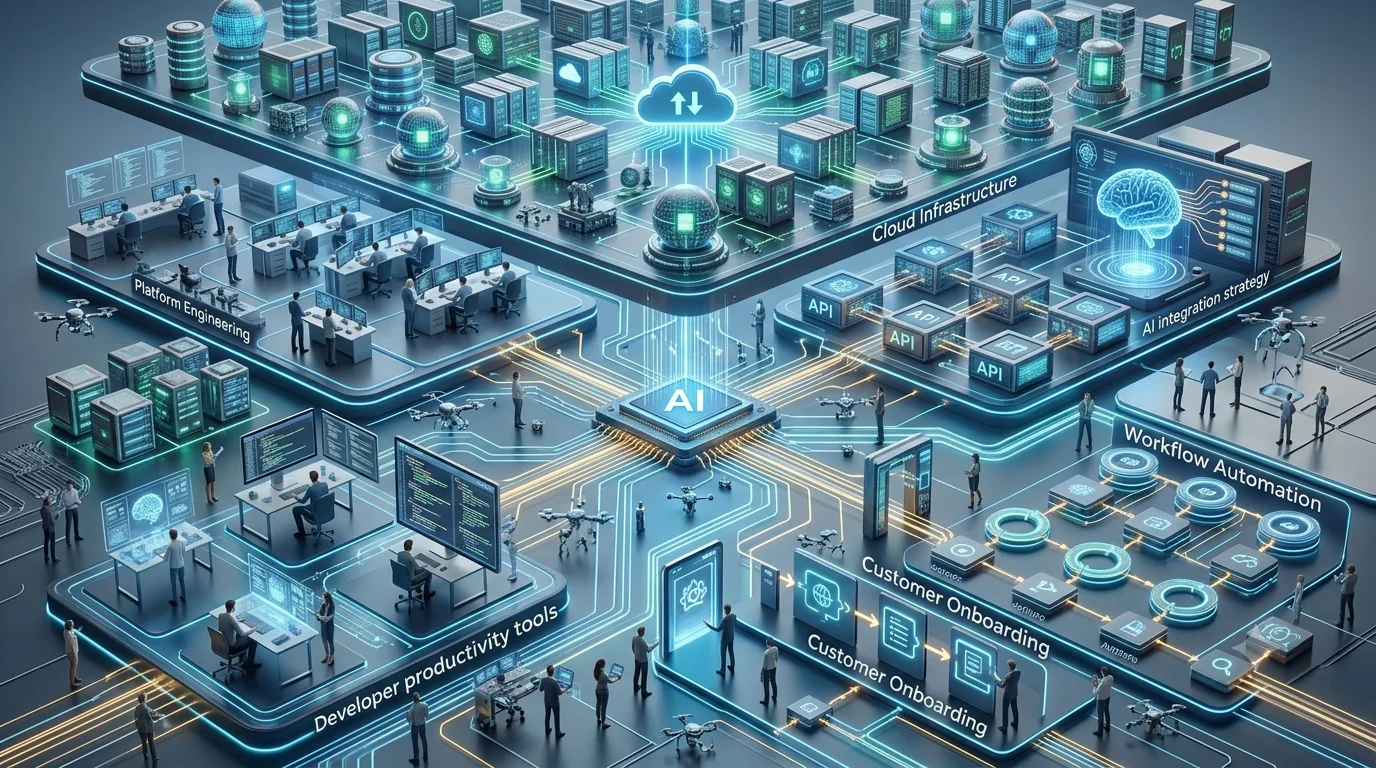
Why Technical Consulting Is Becoming More Strategic
Enterprise customers increasingly expect guidance that connects technology decisions with business goals.
Modern technical consultants help customers:
- Assess AI readiness
- Prioritize automation opportunities
- Reduce implementation risk
- Improve software adoption
- Optimize developer workflows
- Plan long-term AI initiatives.
Rather than focusing exclusively on product features, they help organizations make informed technology decisions that support sustainable business growth.
Enterprise AI Governance and Responsible Adoption
AI implementation must balance innovation with governance.
Technical post-sales leaders should understand key governance principles, including:
- Data privacy
- Security controls
- Access management
- Regulatory compliance
- Model monitoring
- Auditability
- Responsible AI practices
Although governance requirements vary across industries, understanding these principles helps build customer trust and supports responsible AI adoption.
Common Mistakes During AI Implementations
Even experienced organizations encounter challenges when deploying AI solutions.
Some of the most common mistakes include:
Focusing on Technology Instead of Business Outcomes
Customers invest in AI to solve business problems—not simply to deploy new software.
Technical leaders should always connect implementation decisions to measurable business objectives.
Overcomplicating the First Deployment
Trying to automate every process during the initial rollout increases project complexity.
Successful implementations often begin with smaller use cases before expanding across the organization.
Ignoring Change Management
Technology alone does not drive adoption.
Organizations also need:
- Training
- Communication
- Executive sponsorship
- Documentation
- Ongoing enablement
These activities help employees adopt new workflows with confidence.
Neglecting Developer Experience
Confusing APIs, incomplete documentation, and difficult onboarding create unnecessary friction.
Investing in a better developer experience often improves long-term adoption more effectively than adding new features.
Failing to Define Success Metrics
Organizations should establish measurable objectives before implementation begins.
Examples include:
- Time-to-value
- Customer adoption
- Deployment speed
- User satisfaction
- Operational efficiency
- Business ROI
Without defined metrics, it becomes difficult to objectively evaluate the implementation’s success.
A Practical Enterprise AI Implementation Framework
Many successful enterprise AI projects follow a structured lifecycle:
1. Discovery
Identify business goals, stakeholders, existing systems, and implementation priorities.
2. Solution Design
Develop architecture, integration strategy, governance requirements, and rollout plans.
3. Deployment
Configure systems, validate integrations, and prepare production environments.
4. User Adoption
Deliver onboarding, technical enablement, documentation, and training.
5. Optimization
Review customer feedback, monitor adoption metrics, refine workflows, and identify expansion opportunities.
Following a structured framework helps reduce implementation risk while improving customer satisfaction.
Which AI Skills Do Technical Post-Sales Leaders Need in 2026?
Artificial intelligence is reshaping enterprise software at an unprecedented pace. Technical post-sales leaders who continue developing both technical and business capabilities will be better positioned to help customers succeed in increasingly complex environments.
The future isn’t about replacing technical expertise with AI. Instead, it’s about combining human judgment, customer empathy, strategic thinking, and AI-powered productivity to deliver exceptional customer outcomes.
In this final section, we’ll explore the trends shaping technical post-sales leadership beyond 2026, practical best practices, frequently asked questions, and a readiness checklist you can use to evaluate your own skills.
Emerging AI Trends That Will Shape Technical Post-Sales Leadership
Enterprise AI adoption continues to accelerate, bringing new expectations for technical customer-facing teams.
Several trends are already influencing how organizations hire, train, and evaluate post-sales professionals.
1. AI-Augmented Customer Success
Customer success teams are increasingly using AI to support proactive customer engagement.
Rather than waiting for customers to report problems, AI-powered analytics can help identify:
- Adoption risks
- Low product usage
- Support trends
- Expansion opportunities
- Customer health indicators
- Potential churn signals
AI enables teams to focus their time where it creates the greatest customer value.
2. Intelligent Developer Platforms
Developer platforms are rapidly evolving with built-in AI capabilities.
Modern platforms increasingly provide:
- AI-assisted documentation
- Intelligent debugging
- Automated testing recommendations
- Code generation
- Security suggestions
- Knowledge search
Technical post-sales leaders should understand these capabilities to help customers adopt them responsibly.
3. Predictive Implementations
Traditional implementations relied heavily on manual planning.
Future enterprise implementations are expected to use AI for:
- Risk prediction
- Resource planning
- Timeline estimation
- Dependency analysis
- Project monitoring
- Performance forecasting
These capabilities help reduce delays while improving project visibility.
4. Responsible AI Will Become a Business Requirement
Organizations are placing greater emphasis on responsible AI practices.
Technical post-sales leaders should understand topics such as:
- AI governance
- Transparency
- Data privacy
- Security
- Compliance
- Risk management
- Human oversight
Customers increasingly evaluate vendors based not only on AI capabilities but also on how responsibly those capabilities are implemented.
AI Skills That Will Remain Valuable

Technology evolves quickly, but several skills continue to provide long-term value regardless of changing AI platforms.
Successful technical leaders consistently demonstrate:
Strategic Thinking
Understanding customer objectives before recommending technology.
Business Communication
Explaining technical concepts in language appropriate for executives, managers, developers, and business users.
Problem Solving
Breaking complex implementation challenges into manageable solutions.
Customer Empathy
Understanding customer priorities and aligning recommendations with measurable business outcomes.
Continuous Learning
Remaining informed about new technologies, enterprise software trends, and evolving implementation best practices.
Best Practices for AI-Driven Technical Post-Sales Teams
Organizations that successfully implement AI often share several common characteristics.
Start With Business Objectives
Every AI initiative should solve a clearly defined business problem.
Avoid adopting AI simply because it’s popular.
Instead, define:
- Business goals
- Success metrics
- Customer outcomes
- Expected ROI
before selecting tools.
Build Incrementally
Large-scale AI deployments introduce unnecessary risk.
Many successful organizations begin with:
- Pilot projects
- Small automation initiatives
- Limited integrations
- Controlled rollouts
before expanding across the business.
Prioritize Documentation
Documentation supports:
- Faster onboarding
- Easier troubleshooting
- Better collaboration
- Consistent implementation
- Long-term maintainability
High-quality documentation also reduces support requests.
Measure Outcomes Continuously
Track both technical and business performance.
Useful metrics include:
- Adoption rate
- Time-to-value
- Customer satisfaction
- Support volume
- Feature utilization
- Operational efficiency
- Renewal rate
- Expansion revenue
Reviewing these metrics regularly helps identify opportunities for continuous improvement.
Practical Leadership Tips
High-performing technical post-sales leaders often follow several practical habits.
Build Relationships Across Departments
Collaborate regularly with:
- Engineering
- Product Management
- Customer Success
- Sales
- Professional Services
- Security
- Executive Leadership
Strong collaboration improves implementation quality.
Speak the Customer’s Language
Executives care about:
- ROI
- Business value
- Risk
Developers focus on:
- APIs
- Documentation
- Integrations
- Reliability
Tailoring communication to different audiences improves trust and alignment.
Stay Curious
AI technologies evolve rapidly.
Develop time each month for:
- Learning
- Product updates
- Industry reports
- Customer feedback
- Hands-on experimentation
Continuous learning remains one of the strongest competitive advantages.
A Practical Example
Imagine an enterprise software company deploying an AI-powered development platform for a global customer.
Instead of relying entirely on manual implementation, the technical post-sales team introduces:
- AI-assisted onboarding guides
- Automated documentation updates
- API integration templates
- Intelligent ticket routing
- Usage analytics dashboards
- Self-service knowledge resources
The result is a smoother onboarding experience, faster issue resolution, and better collaboration between customer teams.
While the specific outcomes will vary by organization, this example illustrates how combining AI with structured implementation practices can improve the customer experience.

Frequently Asked Questions
What are the most important AI skills for technical post-sales leaders?
The most valuable skills combine technical expertise with business understanding. These include AI implementation planning, workflow automation, developer tooling knowledge, API integration, customer success engineering, stakeholder communication, developer experience (DX), platform engineering fundamentals, and AI governance.
Do technical post-sales leaders need to be software developers?
Not necessarily.
Programming experience can be helpful, but many successful professionals focus on architecture, integrations, business consulting, implementation strategy, and customer communication rather than writing production code.
Which AI developer tools should leaders understand first?
Start by learning the purpose of:
- AI coding assistants
- Documentation automation platforms
- AI testing tools
- Developer productivity platforms
- API management tools
- Monitoring and observability platforms
- Workflow automation solutions
Understanding how these categories support customer outcomes is often more valuable than mastering every individual product.
Why is developer experience (DX) important?
A positive developer experience encourages adoption, reduces implementation friction, and improves customer satisfaction.
Clear documentation, reliable APIs, interactive developer portals, and efficient workflows all contribute to better long-term product success.
How should organizations measure AI implementation success?
Successful AI implementations should evaluate both technical performance and business outcomes.
Useful metrics include:
- Time-to-value
- Product adoption
- User engagement
- Workflow automation improvements
- Customer satisfaction
- Operational efficiency
- Renewal rates
- Business ROI
How can technical post-sales leaders prepare for the future?
Focus on continuous learning while strengthening both technical and leadership capabilities.
Areas worth developing include:
- AI governance
- Cloud-native technologies
- API strategy
- Enterprise architecture
- Platform engineering
- Customer success
- Business consulting
- Communication
- Change management
Professionals who combine technical depth with strong customer relationships will remain valuable regardless of how AI evolves.
AI-Ready Technical Post-Sales Leadership Checklist
Use this checklist to evaluate your current capabilities.
Leadership
✔ Communicate technical concepts clearly.
✔ Build trust with customers.
✔ Lead cross-functional projects.
✔ Align technology with business goals.
✔ Manage stakeholder expectations.
Technical Skills
✔ Understand AI implementation planning.
✔ Explain API integrations.
✔ Recommend developer tooling.
✔ Support enterprise AI adoption.
✔ Understand cloud-native fundamentals.
✔ Promote responsible AI practices.
Customer Success
✔ Guide onboarding effectively.
✔ Measure customer adoption.
✔ Recommend workflow improvements.
✔ Deliver ongoing technical enablement.
✔ Identify expansion opportunities.
Strategic Skills
✔ Evaluate AI solutions objectively.
✔ Connect technical decisions to business value.
✔ Prioritize customer outcomes.
✔ Continuously improve implementation processes.
Conclusion
Technical post-sales leadership is entering a new era where success depends on far more than technical troubleshooting. Enterprise customers increasingly expect advisors who can combine AI knowledge, implementation expertise, developer experience, and business strategy to solve complex challenges and deliver measurable results.
Recent industry research also highlights why this transformation matters. Bain & Company found that many software vendors have increased investment in customer success. Yet customer retention has continued to decline, underscoring the importance of improving the quality of post-sales engagement rather than simply expanding the team. The research also shows that customers place a high value on technical implementation expertise and well-coordinated post-sales support.
The technical post-sales leaders who thrive in 2026 will be those who embrace continuous learning, communicate effectively across technical and business audiences, understand responsible AI adoption, and focus relentlessly on helping customers achieve real business outcomes.
Whether you are a Technical Account Manager, Solutions Architect, Customer Success Engineer, or Enterprise Consultant, investing in these AI-ready skills today will help you build stronger customer relationships, improve implementation success, and remain a trusted advisor as enterprise AI continues to evolve.
What Are the Best AI Tools for Business Workflow Analysis and Process Mapping in 2026?
Is Droven.io AI Automation Tools Worth It? (2026 Review)
Claude Code vs OpenCode: Which AI Coding Tool Wins in 2026?
Droven.io Cloud Computing Guide: A Practical Decision Framework for 2026
Now exploring our New Free Tools: “Turn images into one PDF” “Image to WEBP”